September 26, 2026
The Other Gonin-bayashi | Flute, Gong, Two Laced Drums and a Big Drum — Tokyo’s Festival Music Is Five People, One Sound
If you have seen a Japanese Hina Doll display for Girls’ Day, you may remember a little band sitting a few tiers down: five boy musicians. They are called the Gonin-bayashi — “the five musicians.”
But look the word up in a Japanese dictionary and you will find a second meaning. Gonin-bayashi is also the five players of an Edo-style festival band — the ones perched on a float at an autumn festival, making that flute-and-drum sound that drifts down the street. And their instruments are almost entirely different from the dolls’.
This article has one message: festival music in Tokyo is five people making one sound. Once you know who is playing what, the noise of a matsuri suddenly separates into voices you can follow.
What this article covers
- Why “Gonin-bayashi” has two meanings
- What each of the five festival players actually plays
- How that differs from the five dolls on the Hina display
- Kasai-bayashi, said to be the root of Tokyo’s festival music
- What to listen for at your next festival
One word, two bands
The Japanese dictionary Digital Daijisen gives two entries under “Gonin-bayashi.”
The first is the dolls: a set of five boys, each assigned one role — chanting voice (utai), flute, small shoulder drum (kotsuzumi), hip drum (ōtsuzumi), and stick drum (taiko).
The second is the festival band: an Edo festival ensemble of flute, a small gong (kane), two tightly laced drums, and one big drum.
Same name, completely different music. The dolls play the music of Noh theatre. The festival band plays the music of the neighborhood.
The five festival players — who plays what?
When dictionaries and local governments describe Tokyo’s festival music, one name always comes up: Kasai-bayashi. According to Edogawa City’s cultural-property page, its band looks like this:
- Big drum (called ōdo) — 1 player
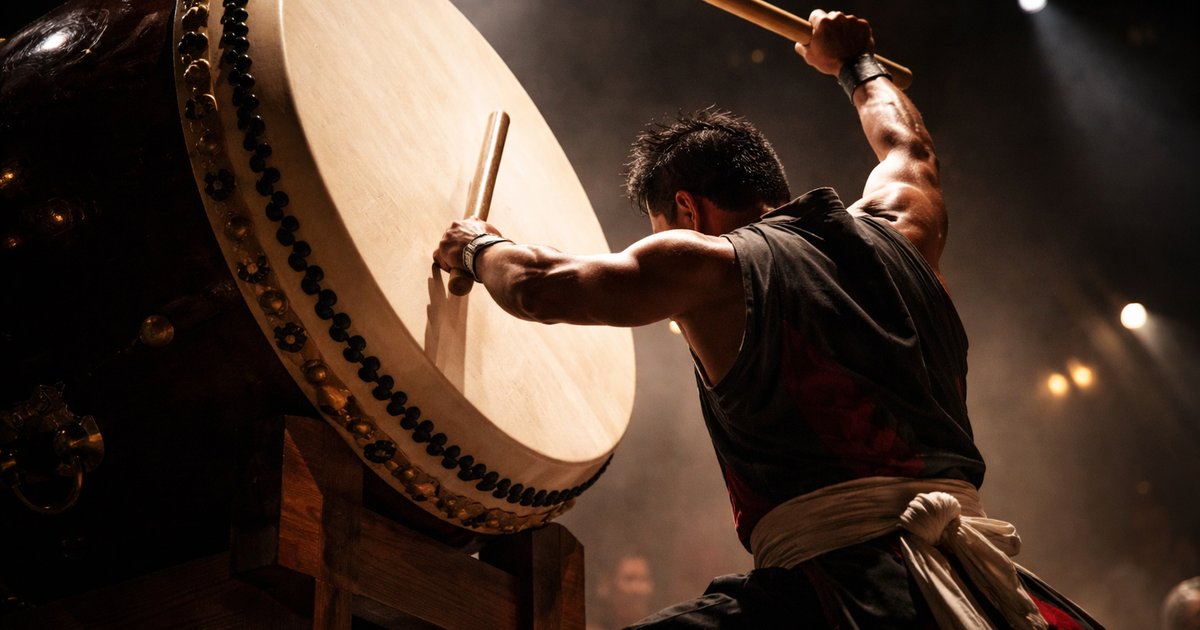
The deep “don.” A long-bodied drum with its skin fixed by tacks — the floor everything else stands on. - Laced drums (called shirabe) — 2 players
The quick, dry, high “ten-tsuku” patter. The skin is pulled tight with cords. Two of the five players are on these. - Flute (called tonbi) — 1 player
A seven-holed flute made of shino bamboo. The only player of the five carrying a melody. - Gong (called yosuke) — 1 player
A small brass gong struck with a bamboo stick tipped with deer antler. It adds the bright metallic flash.
What charms us most is that each instrument has a nickname. The flute is tonbi — the Japanese word for a kite, the bird. The gong is yosuke, which sounds like a man’s name. The laced drum is shirabe, meaning “tuning” or “melody.” The Kasai-bayashi preservation society introduces its instruments by these very names. We couldn’t find a reliable source for where the nicknames came from, so we’ll leave them as names the festival people simply use.
For how the long-bodied drum and the laced drum are built differently, see our guide to taiko types and sounds. A festival band is basically those two kinds of drum sharing one stage.
Three of the five are drums
Count them: three of the five players are drummers — one low, two high.
The big drum treads slowly on the ground. The two laced drums trade quick patterns on top. The flute threads a single line of melody through it all, and the gong catches the light. Take any one of them away and there is a hole in the picture. That is what “five people, one sound” means.
Edogawa City also notes how a performance usually runs: it opens with a rapid drum call-in (the age), moves through several pieces in a set order starting from one called Yatai-bayashi, and closes by returning to Yatai-bayashi again.
The dolls are a Noh band
So who are the five dolls?
The encyclopedia Nihon Daihyakka Zensho describes the Hina-doll Gonin-bayashi as the musicians of Noh theatre turned into dolls. According to the Nohgaku Performers’ Association, Noh uses four instruments: flute, kotsuzumi, ōtsuzumi and taiko. Add one chanter, and you have five.
Side by side:
- The five dolls: voice, flute, small shoulder drum, hip drum, stick drum (Noh music)
- The five festival players: flute, gong, laced drum, laced drum, big drum (street-festival music)
Only the flute and a drum overlap. The dolls have no gong; the festival band has no hand drums and no voice. Two completely different musics living under one name.
One more thing they share: the same encyclopedia dates the doll version to around the Tenmei era (1781–89) in Edo. And Kasai-bayashi, as we’ll see, is said to date from the early-to-mid 1700s. Both sets of five, in other words, were born in the city of Edo — old Tokyo.
Kasai-bayashi — the root of Tokyo’s festival sound
Kasai-bayashi comes from the old district of Kasai, around today’s Katsushika and Edogawa wards in eastern Tokyo. It is designated an Intangible Folk Cultural Property of Tokyo.
Tradition says it was begun in the Kyōhō era (1716–1736) by Nose Tamaki, a priest of the Katori Shrine in Kanamachi (today’s Kasai Shrine). The Katsushika City history, however, adds that Nose Tamaki’s background “is not clear.” So we’ll hold that origin story as tradition rather than fact.
Digital Daijisen calls Kasai-bayashi the ancestor of festival music in today’s Tokyo and the surrounding area. According to the Sekai Daihyakka Jiten encyclopedia, its style spread to become Kanda-bayashi, Fukagawa-bayashi, Meguro-bayashi and more, and it played for Edo’s two great festivals, the Sannō Matsuri and the Kanda Matsuri.
It also goes by a cheerful nickname: baka-bayashi — roughly, “the silly music.” Take it as a sign of how lively it is.
Kyoto sounds different again
If you’ve been to Kyoto’s Gion Matsuri, you may remember a different festival sound: a ringing kon-chiki-chin.
According to the Sekai Daihyakka Jiten, Gion-bayashi is played on gongs, drum and a Noh-style flute (nōkan), and the gongs’ “kon-chiki-chin” is what people remember. Different band, different sound from Tokyo’s.
Every region has its own festival music. The ten-tsuku on a Tokyo float and the kon-chiki-chin on a Kyoto one — hearing both is a small journey in itself.
At your next festival, listen for these
First, find the low “don.” That’s the big drum — the floor.
Then notice there are two quick “ten-tsuku” patterns. Two laced drums, answering each other.
Follow the flute. Of the five, it’s the only one singing.
Last, listen for the flash of the gong. Small — but the moment it stops, the music feels strangely lonely.
And if you can see up onto the float, count the players.
In closing
The five dolls sit quietly indoors in early spring. The five festival players sweat on top of a float in the autumn street.
Same name, different five. But both make a sound none of them could make alone. If festival music reaches you from somewhere, try picking out all five voices.
Sources
- Edogawa City, “Kasai-bayashi” (cultural properties page, Japanese): Tokyo Metropolitan Intangible Folk Cultural Property; tradition that it was created by a priest of Katori Shrine in Kanamachi; band of big drum (ōdo) ×1, laced drum (shirabe) ×2, flute (tonbi) ×1, gong (yosuke) ×1; performance order
https://www.city.edogawa.tokyo.jp/e_bunkazai/bunkazai/toroku/minzokugeino011.html - Katsushika City History, Chapter 5 (Japanese): begun in the Kyōhō era (1716–1736) by Nose Tamaki, priest of Katori Shrine (now Kasai Shrine); his background is not clear; basic band of five
https://www.city.katsushika.lg.jp/history/history/5-3-3-330-2.html - Kasai-bayashi Preservation Society, “Instruments used in Kasai-bayashi” (Japanese): tonbi = seven-holed shino-bamboo flute; shirabe = laced drum; ōdo = tacked long-bodied drum; yosuke = brass gong struck with a deer-antler-tipped bamboo stick
https://sites.google.com/view/kasaibayasihozonkai/ - Kotobank, “Gonin-bayashi” (Digital Daijisen: two meanings — Hina dolls of utai, flute, kotsuzumi, ōtsuzumi and taiko; Edo festival ensemble of flute, gong, two laced drums and big drum. Nihon Daihyakka Zensho: Noh musicians made into dolls, devised in Edo around the Tenmei era)
https://kotobank.jp/word/五人囃子-503462 - Kotobank, “Kasai-bayashi” (Digital Daijisen: considered the ancestor of festival music in Tokyo and its surroundings; Sekai Daihyakka Jiten: also called baka-bayashi; spread to Fukagawa, Meguro and elsewhere)
https://kotobank.jp/word/葛西囃子-461591 - Kotobank, “Matsuri-bayashi” (Sekai Daihyakka Jiten: Kasai-bayashi played for the Sannō and Kanda festivals; Gion-bayashi played on gong, drum and nōkan flute, known for its “kon-chiki-chin”)
https://kotobank.jp/word/祭り囃子-635169 - Nohgaku Performers’ Association, “Instruments of Noh” (Japanese): flute, kotsuzumi, ōtsuzumi and taiko
https://www.nohgaku.or.jp/encyclopedia/whats/gakki.html
Both Edogawa and Katsushika cities describe the origin of Kasai-bayashi (Kyōhō era, Nose Tamaki) as tradition, and this article treats it the same way. We could not find reliable sources for why the flute is called “tonbi” or the gong “yosuke,” so we haven’t guessed. Band make-up, piece order and instrument names vary between regions and preservation groups; what’s described here is the basic form of Kasai-bayashi. The origin of the nickname “baka-bayashi” is also debated, and we don’t state one here.