October 11, 2026
What Is Tomonaoshi? | The Invisible Repair on the Other Side of Kintsugi — Two Paths from the Same Lacquer
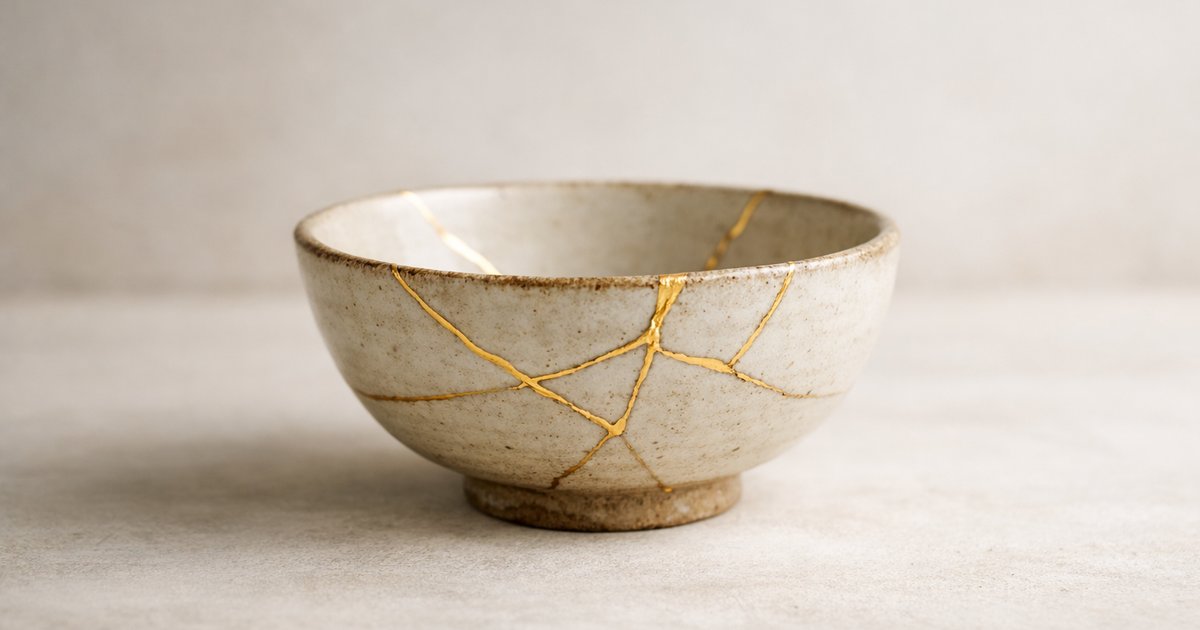
Kintsugi is the Japanese way of mending broken pottery with urushi lacquer and finishing the seams with gold. Instead of hiding the repair, it shows it off as a shining golden line. That is probably what drew many of us to it in the first place.
But kintsugi is not the only way Japan mends its bowls. There is another approach that heads in exactly the opposite direction.
It is called tomonaoshi. Cracks and chips are repaired to match the color and texture around them, so that you can no longer tell where the bowl was mended.
In this article, we gently trace the difference — and the surprising common ground — between kintsugi, which shows the repair, and tomonaoshi, which makes it disappear.
What you’ll learn
- What kind of repair tomonaoshi is
- What the word tomo means
- How it differs from kintsugi, and what they share
- Why pure white is so hard to make with lacquer
- How to think about choosing between the two
Tomonaoshi: a repair that erases itself
Natsumi Kawai, a restorer who works mainly with urushi, describes tomonaoshi as a technique for repairing chipped or broken areas so that they resemble the texture around them. She also calls it a way of mending so that the repair can’t be seen — almost like turning back time.
In an interview published by the Japanese craft company Nakagawa Masashichi, her work is described the same way: tomonaoshi imitates and recreates the “original” surface that remains around the damage. Done well, it can be hard to tell where the chip ever was.
If kintsugi is a repair that says, “This is where it broke,” tomonaoshi is one that quietly gives the bowl its old face back.
Tomo means “the same”
In Japanese, the character 共 (tomo) can mean “the same” or “matching.”
When a kimono or a dress is made, the leftover scraps of the very same fabric are called tomogire or tomonuno — “same cloth.”
Read tomonaoshi with that in mind, and the name explains itself: mending with the same color and the same texture as the bowl. That is the biggest difference from kintsugi, which adds something different — gold — and lets it show.
Kintsugi also has a method called yobitsugi, where missing pieces are borrowed from another vessel. The kintsugi studio Tsugu Tsugu explains tomotsugi — joining fragments of the same piece to bring back its original form — as the opposite of yobitsugi.
Both are made with lacquer
They look like opposites, but in Japan, tomonaoshi and kintsugi share one big thing: both are traditionally done with urushi lacquer.
The lacquer glues the crack, fills the chip, and smooths the surface. Up to that point, the work is the same. Only the final step is different.
- Kintsugi — gold or silver powder is sprinkled on at the end, making the seam shine
- Tomonaoshi — pigments are mixed into the lacquer to match the bowl’s color, so the seam blends in
According to the same interview, Kawai works mainly with lacquer, but also experiments with painting materials such as colored clays and gofun (a white pigment made from shells). For old pieces, she writes, she may even give the repair an aged look to suit the period.
So from a single material, urushi, two paths branch out: one that shows the repair and one that hides it. We wrote more about finishes in our article on silver and lacquer finishes.
Why white is hard
Tomonaoshi has its own challenges, too.
Tsugu Tsugu explains that urushi is naturally brownish, so even with plenty of white pigment mixed in, it never becomes pure white — it drifts toward a skin tone or light beige. When a white porcelain bowl is repaired with lacquer, the mended area may look slightly different.
The studio also notes that matching colors takes more work than sprinkling gold, and that the result may never be exactly the same as the original.
“Invisible” repair isn’t magic. It is careful work, where the craftsperson searches, bowl by bowl, for how close they can get.
Showing the repair, or hiding it
Western ceramic restoration also has ways of making repairs less visible. Tsugu Tsugu introduces the British “color fill” method, where chips are filled with an epoxy putty mixed with pigment. (It is meant for display pieces, not for tableware.)
Seen that way, kintsugi’s choice to show the repair may be the more unusual one, globally speaking.
Yet in Japan, studios rarely offer only one or the other. Many do both, deciding together with the owner what suits each bowl and each person’s feelings.
Neither one is the “right” answer.
How to choose
A few things to keep in mind:
- If you want the break to become part of the bowl’s story, choose kintsugi. The seam becomes a new landscape.
- If you want to use it again just as it was, choose tomonaoshi — for a gift, say, or a piece whose painted pattern you want to keep.
- For white bowls, a lacquer tomonaoshi may look a little off-color. Ask to see samples first.
- Costs vary by studio. Color matching may come with an extra fee.
If it’s something you’ll eat or drink from, check what material the repair uses. We’ve gathered the tableware notes in our article on how kintsugi repair works.
A gentle way to start today
Pick up a bowl at home that has a small chip.
Would you like to show that chip as a line of gold? Or would you rather mend it as if it had never happened?
The answer can be different for every bowl. Just asking yourself which way your heart leans tells you a little about what that bowl means to you.
Closing thoughts
Kintsugi accepts the break and writes it into the bowl’s history.
Tomonaoshi remembers how the bowl looked before and gives that back.
They head in opposite directions, but both begin with the same wish: “I want to use this bowl again.” And in Japan, the same material — urushi — has stayed beside them both.
Sources
- Natsumi Kawai, “Tomonaoshi leaflet” (Japanese; tomonaoshi = repairing chipped or broken areas to resemble the surrounding texture; mending so the repair can’t be seen, like turning back time; aged finishes for old pieces)
https://kawainatsumi.com/news/共直しのリーフレットができました【修復】.html - Nakagawa Masashichi, “Repairing vessels with urushi: the work of a restoration specialist” (Japanese, Dec. 31, 2016; tomonaoshi recreates the original surface around the damage; mainly lacquer, also colored clays, pigments and gofun)
https://story.nakagawa-masashichi.jp/7430 - Tsugu Tsugu, “Not just gold! Color-matched repair with lacquer tomotsugi (tomonaoshi)” (Japanese; tomotsugi as the opposite of yobitsugi; British color fill with epoxy putty for display only; urushi can’t make pure white; colors may not match exactly; extra fee for color matching)
https://kintsugi-girl.com/tomotsugi_colorfill_kintsugi/ - Kotobank, “Tomogire” (Japanese dictionary; leftover cloth of the same fabric as the garment, also called tomoji or tomonuno)
https://kotobank.jp/word/共切れ
Names such as tomonaoshi and tomotsugi, as well as techniques, materials and prices, vary from studio to studio. If a repair uses materials other than urushi (such as synthetic resin), please check with the studio or product maker whether it is safe for tableware.