What Is Tomonaoshi? | The Invisible Repair on the Other Side of Kintsugi — Two Paths from the Same Lacquer
If kintsugi shows off a repair in gold, tomonaoshi makes it disappear, matching …
Gintsugi: Silver Repairs That Slowly Turn Dark | Kintsugi Finishes Beyond Gold — Silver, Platinum, Tin and Lacquer
The line in a kintsugi repair doesn’t have to be gold. It can be silver (g…
Bakōhan: The Tea Bowl Called “the Origin of Kintsugi” Was Mended With Iron Staples, Not Gold
You may have heard that kintsugi began when the shogun Ashikaga Yoshimasa sent a…
How Kintsugi Actually Works | The Gold Is Not the Glue — and Yobitsugi, Where the Missing Piece Comes from Another Bowl
You have probably met kintsugi as a metaphor first. This is what actually happen…
What Is Urushi? | The Japanese Lacquer That Needs Damp Air to Dry, Explained Gently for Beginners
In a kintsugi photograph you see the gold, but what actually holds the bowl toge…

Different Types of Kintsugi|Traditional, Simplified, and Modern Approaches Explained
When people hear the word “Kintsugi,” they often imagine a single, fixed method.…

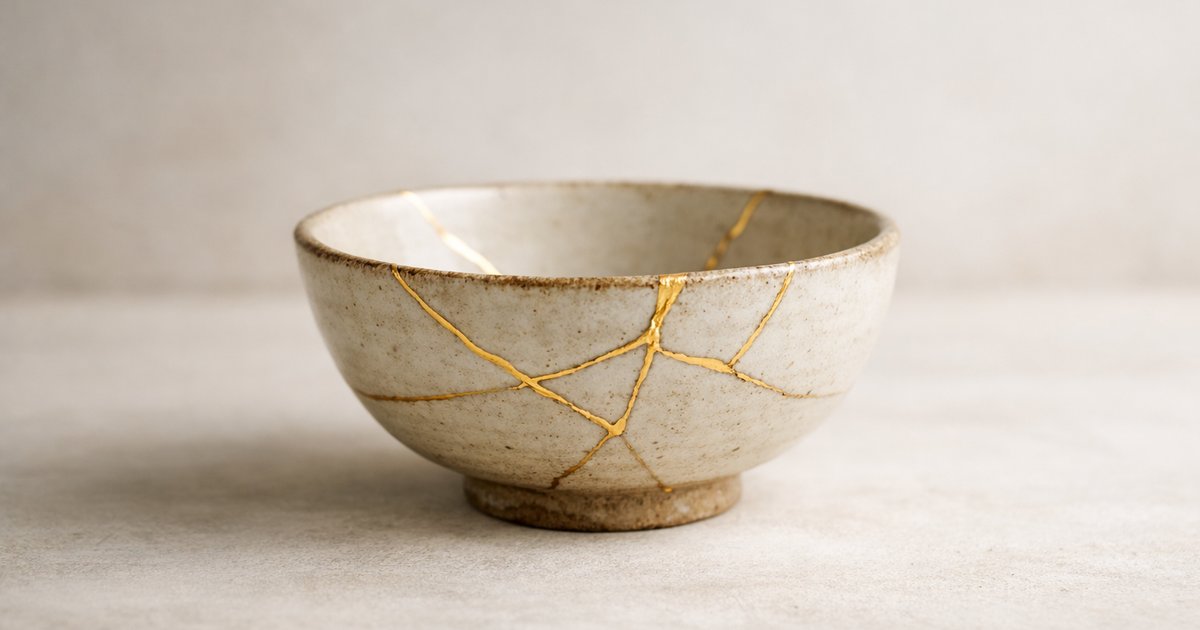
What is Kintsugi? The Japanese Art of Embracing Brokenness
When a cherished piece of pottery becomes chipped or broken, many people feel th…

What is Kintsugi? A Japanese Technique That Turns Broken Pottery into Beauty
Kintsugi is a traditional Japanese technique of repairing broken or chipped pott…

What is Kintsugi? The Japanese Art of Turning Broken Pottery into Beauty
Kintsugi is a traditional Japanese technique of repairing broken or chipped pott…